I Married a Dying Man Because It Was His Final Wish — After His Funeral, His Lawyer Knocked on My Door and Said: “He Made Me Wait Until Today to Tell You WHO HE REALLY WAS.”😨😨
Three times a week, I volunteered with a local hospice support program. Most of the people I visited were elderly or seriously ill and needed a little help around the house.
A few months ago, I started visiting a new patient.
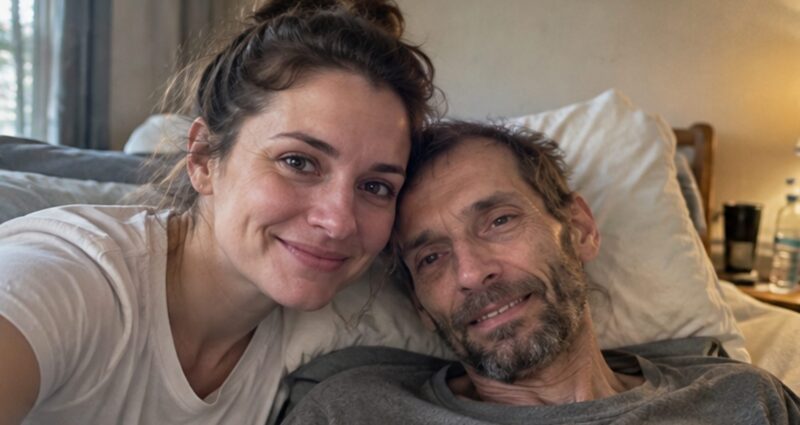
His name was Daniel. He was forty-seven, had stage four cancer, and lived completely alone.
Daniel was sweet, kind, and easy to talk to. We became friends almost immediately.
I brought him meals, helped clean his house, and often we simply played board games over a cup of tea.
Then one day, Daniel looked at me and said:
“Marry me. I know how this sounds, but I’d like to die knowing I’m not alone.”
I was caught off guard and said:
“Daniel, we haven’t known each other for very long…”
He replied:
“I know. But that’s been enough time for me to understand what kind of person you are. It would truly mean everything to me. It’s the ONE THING I’d like to do before I die.”
I agreed.
I don’t know how to explain it, but I felt some kind of connection between us.
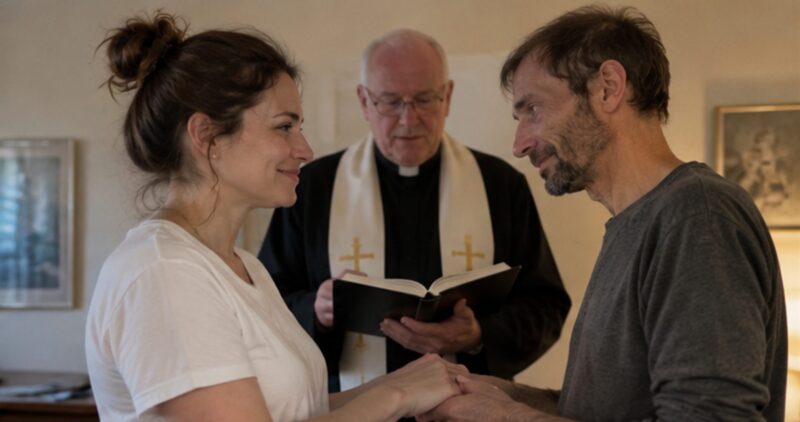
The very next day, a priest came to Daniel’s house and married us.
I simply put on a white T-shirt because it was the only white thing I had in my closet. Standing there in his living room, with no guests, flowers, or music, we became husband and wife.
I could see how happy he was in that moment.
Daniel died twelve days later.
I truly grieved for him.
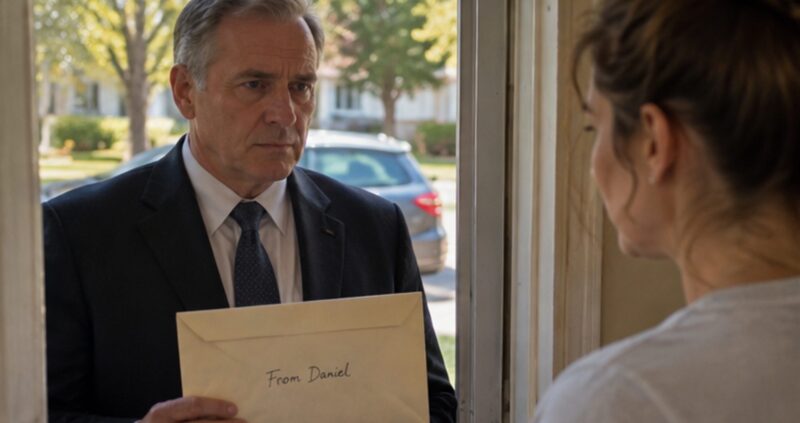
After his funeral, I was at home when someone suddenly knocked on the door.
A man was standing there. He introduced himself as Daniel’s lawyer and said:
“Daniel made me wait until today to tell you the TRUTH about who he really was.”
He handed me an envelope and said that once I read the LETTER inside, I would understand everything.
My hands were shaking as I began reading the first line:
“Our meeting was NOT an accident. I’ve known you your entire life and quietly watched over you.”
When I moved on to the SECOND LINE, my legs gave out, and I collapsed to the floor.
Read the rest of this story in the 1st comment ⬇️👇👇
PART 2
The second line read:
“Your father didn’t die the way you were told. He died saving my life.”
I stopped breathing.
For several seconds, I simply stared at the words.
Then my knees gave out.
The lawyer caught my arm before my head hit the floor.
“Are you all right?”
“No,” I whispered.
I wasn’t.
My father had died when I was four years old.
At least, that was what I had always been told.
My mother said there had been an accident at the factory where he worked.
She never talked about the details.
Whenever I asked questions as a child, she would only say:
“Your father was a good man. That’s all you need to remember.”
I looked down at Daniel’s letter again.
My hands were shaking so badly that the paper rattled.
I forced myself to continue.
“Your father, Michael, was my closest friend.
I was nineteen when I started working beside him.
He was older than me, but he treated me like a younger brother.
The day of the accident, I made a mistake.
A serious one.
Your father saw what was happening before I did.
He pushed me out of danger.
He didn’t make it out himself.”
I covered my mouth.
The lawyer quietly sat on the floor beside me.
I kept reading.
“I spent years believing I had stolen your father from you.
Your mother never blamed me.
But I blamed myself every single day.”
My vision blurred with tears.
Suddenly, memories I had never understood began returning.
Birthday cards with no return address.
An envelope of money that appeared when my mother couldn’t pay the electricity bill.
The anonymous scholarship that covered my first year of college.
The deposit for my first apartment that my mother always claimed came from an “old family friend.”
I kept reading.
“That old family friend was me.”
I gasped.
The lawyer looked at me but said nothing.
Daniel had been there.
Not physically.
Not openly.
But quietly.
For decades.
“Your mother made me promise never to tell you what happened.
She was afraid you would grow up carrying my guilt too.
So I stayed away.
But I kept my promise to your father.
I made sure you were never completely alone.”
Tears rolled down my face.
I remembered something Daniel had said during one of our first hospice visits.
We had been drinking tea when he suddenly asked:
“Did you ever feel like someone was watching over you?”
I laughed at the time.
“I wish.”
Daniel had smiled strangely.
Now I understood why.
I turned the page.
“When I learned I was dying, I broke the promise I made to your mother.
I contacted the hospice organization and requested you specifically.”
I froze.
So even that hadn’t been an accident.
Daniel had chosen me.
“I didn’t know whether you would remember me.
You had seen me only a few times when you were very young.
I only wanted to meet the woman your father died protecting.”
My chest hurt.
I remembered Daniel watching me cook.
Listening to me complain about work.
Laughing when I cheated at board games.
I had thought we were two strangers becoming friends.
He had known exactly who I was from the beginning.
Then I reached the part about the marriage.
“You’re probably wondering why I asked you to marry me.
The truth is, I was selfish.
I wanted, just once before I died, to feel like I belonged to the family of the man who gave me my life.”
I started crying harder.
But then came another paragraph.
“There was also a practical reason.”
I looked at the lawyer.
He nodded.
“Keep reading.”
“For thirty years, I put money aside for you.
I never had children.
I never married.
And when I learned I was dying, I realized everything I owned would eventually go to distant relatives who barely knew me.
I wanted it to go to you.”
I looked up sharply.
The lawyer opened his briefcase.
He removed another envelope.
Daniel had left me his house.
His savings.
His investments.
Everything.
I stared at the papers.
“No.”
The lawyer frowned.
“What?”
“I don’t want it.”
He seemed surprised.
“I married him because he was dying. I didn’t know about any of this.”
“I know.”
“He must have thought—”
“He knew exactly what you would say.”
The lawyer handed me one final note.
Only three lines were written on it.
“If you refuse the money because you think it is payment for marrying me, then give it away.
But please don’t refuse the truth.
Your father saved my life, and you made the end of that life less lonely.”
I pressed the note against my chest.
For the first time since Daniel’s funeral, I understood why he had looked so happy during our tiny wedding.
It wasn’t because he had tricked me into becoming his wife.
It wasn’t because of the money.
It was because, for ten days, he finally felt connected to the family he had spent his entire adult life quietly protecting.
A week later, I visited my mother.
I placed Daniel’s letter on her kitchen table.
She read the first page and immediately began crying.
“You knew?” I asked.
She nodded.
“Why didn’t you tell me?”
“Because your father’s last words to me were about Daniel.”
I froze.
“What did he say?”
My mother wiped her face.
“He said, ‘Don’t let that boy spend his life believing this was his fault.’”
I closed my eyes.
Daniel had spent almost thirty years doing exactly that.
Blaming himself.
Trying to repay a debt my father had never asked him to repay.
In the end, I didn’t keep all the money.
I used part of it to create a small fund through the hospice program for patients who had no family nearby.
The rest helped my mother and me live without financial fear for the first time in years.
But the house?
I kept it.
Not because of its value.
Because inside Daniel’s desk, I found an old photograph.
Two young men stood side by side outside a factory.
One was Daniel at nineteen.
The other was my father.
On the back, in my father’s handwriting, were five words:
“Take care of each other.”
Daniel had spent his whole life honoring those words.
And only after he was gone did I finally understand who he really was.