My 86-Year-Old Husband Asked Me to Smile for One Last Photo Beside His Hospital Bed… I Didn’t Understand Why Until the Nurse Handed Me What He Had Secretly Prepared for Me․․․💔
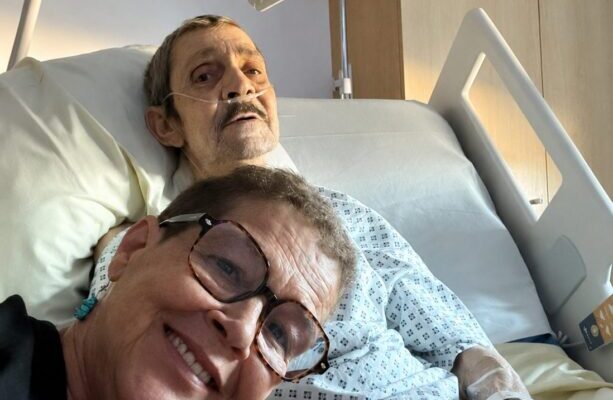
My husband Robert was 86 when this photograph was taken. I was 81, and we had been married for fifty-one years. We had raised three children, welcomed grandchildren, survived financial problems, illnesses and more arguments than I could count.
Through everything, Robert had always been there. That was why, even after he had spent almost three weeks in the hospital with a failing heart, I still kept his slippers beside our bed and bought his favorite cereal. I simply refused to imagine that he might never come home again.
That morning, the doctor took me into the hallway and quietly told me that Robert’s condition had become much worse.
They no longer believed we had days. We might have only hours. I went into the restroom, washed my face and tried to hide the fact that I had been crying, but the moment I returned, Robert looked at me and whispered, “You’ve been crying.” I denied it, and somehow he still managed to smile.
Then he surprised me by asking for my phone. “Take a picture of us,” he said. I told him I looked terrible and that this wasn’t the time for photographs.
Robert smiled weakly and answered, “Look at me. I’m not exactly ready for a magazine cover either.” I laughed through my tears, leaned against him and lifted the phone. When he asked me to smile, I told him I couldn’t.
Robert looked into my eyes and said, “Please. When you see this picture later, I don’t want the last thing you remember about me to be dying.”
So I smiled.
That became our last photograph together.
For the next few hours, Robert kept asking me about our life. Did I remember our first apartment? Our first Christmas? The night our car broke down in the snow? At first I thought he was simply saying goodbye, but then he asked something strange.
“Linda, if you woke up one morning and couldn’t remember something important, would you be scared?” I asked what he meant, but he only squeezed my hand and said, “Promise me you won’t be afraid.”
Later, I noticed him quietly speaking to one of the nurses. She nodded, and when I asked what they were discussing, Robert only said, “Something I should have done sooner.”
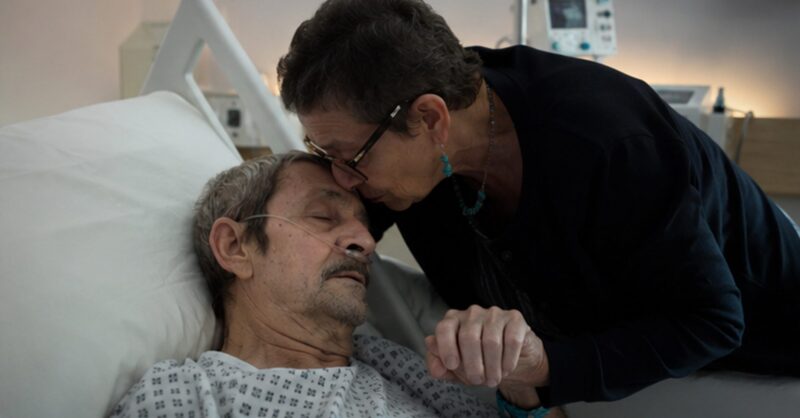
Around midnight, our children finally went home, leaving us alone. I moved closer to Robert’s bed and held his hand. He touched my cheek and whispered, “If tomorrow you wake up and ask where I am, please don’t be scared.”
“Why would I ask where you are?” I said.
Robert was about to answer, but at that exact moment the monitor beside his bed began to sound a sharp alarm. Nurses rushed into the room and pulled me out into the hallway. I kept calling his name, but the door closed in front of me.
A few minutes later, the doctor came out.
He hadn’t said a word yet, but I already knew from his face.
My husband of fifty-one years was gone.
I stood there in the hallway with my phone still in my hand, our final photograph from just a few hours earlier still open on the screen. That was when I remembered Robert’s strange questions, the private conversation he had with the nurse, and his final words to me: “If you wake up tomorrow and ask where I am, don’t be afraid.”
But I still didn’t understand why he had said that.
And most importantly, I had no idea what Robert had secretly left with the nurse for me.
They gave it to me the following morning.
And when I finally understood why he had prepared it, I couldn’t hold back my tears.
This story is very emotional and difficult, so I can’t include every painful detail here. You can read the continuation through the link in the comments 👇‼️
If you don’t see it, change the comment setting from “Most Relevant” to “All Comments.” 👇👇
PART 2
I fell asleep in a chair in the hospital hallway. When I opened my eyes the next morning, our daughter Rachel was sitting beside me. For several seconds I looked around, confused, and then asked, “Where’s your father? What room is Robert in?”
Rachel froze.
Then she started crying.
That was when the nurse who had spoken privately with Robert the night before approached us carrying a dark blue notebook. She handed it to Rachel and explained that Robert had asked her to give it to our family after his death.
For several months, my memory had been getting worse. I misplaced things, repeated conversations and sometimes forgot why I had gone somewhere. Doctors had warned us that I was experiencing significant cognitive decline, but I often forgot how serious those conversations had been. Robert didn’t. While he was dying, he had realized that I might wake up one morning and forget that he was gone.
The first page of the notebook read: For Linda, for the days when remembering becomes difficult.
Robert had written instructions for our children. If I asked where he was, they weren’t supposed to make me experience his death for the first time again and again. They should hold my hand, tell me he loved me and let me remember in my own time.
Then came pages about me: how I liked my coffee, where I usually left my glasses, which song calmed me when I became anxious, even how much water I gave the roses. But most of the notebook contained our memories. Our first date, our wedding, our children’s births, family vacations, silly arguments and ordinary mornings that had meant nothing at the time but now meant everything.
Near the end was the hospital photograph.

Underneath it, Robert had written: I asked Linda to smile because this is how I want her to remember us—not as goodbye, but together.
For a while after his death, I remembered Robert clearly. Then slowly, pieces began disappearing. Some mornings I knew he was gone. Other mornings I thought he had gone shopping or was late coming home from work.
Months later, Rachel sat beside me and showed me our final hospital photograph.
I stared at it for a long time.
There was an elderly man lying in the bed, and I was resting my head against him with a smile on my face. His features felt familiar, but I couldn’t find his name anywhere in my mind.
Finally, I looked at Rachel.
“Who is this man?”
She later told me that question almost broke her.
But she remembered her father’s instructions. Instead of telling me again that my husband was dead, she took my hand and said softly, “He was someone who loved you very much.”
I looked at the photograph again.

“How long?”
“Fifty-one years.”
I ran my fingers over Robert’s face in the picture. I still couldn’t remember his name, our wedding or the life we had shared.
But suddenly tears began running down my cheeks.
Rachel put her arm around me and asked, “Mom, why are you crying?”
I shook my head.
“I don’t know who he is,” I whispered. “But my heart feels like it remembers him.”
Rachel cried with me.
She still reads Robert’s notebook to me. Some days the stories feel familiar. Other days they sound like they happened to strangers. But she says one thing never changes.
Whenever she shows me that final photograph, I touch Robert’s face and eventually smile.
Maybe one day I will forget his name completely.
Maybe I will forget our wedding, our first home and even the sound of his voice.
But after fifty-one years of loving him, some part of me still remembers the most important thing.
He was home.